RFID in Harsh Environments How to Handle Cold Chain, Dusty / Moist / Industrial Warehouses With FYJ AIDC Devices

Conquering Extreme Environments: How FYJ's Industrial RFID Solutions Redefine the Resilience of Smart Warehousing


At the heart of modern industry and supply chains, the stable flow of data is the lifeline. Yet, this lifeline constantly faces harsh challenges—from the -40℃ deep freeze of cold chains to dust-filled mining sites, from salt-spray-corroded ports to vibration-intensive production lines. Extreme environments continually test the reliability of data capture technologies.


As a leader focused on RFID, PDA, and integrated hardware-software solutions, FYJ deeply understands that true industrial intelligence must be built on technology’s ability to conquer harsh environments. We don’t just provide products; we deliver full-scenario, high-availability data resilience solutions for enterprises, ensuring data flows reliably in any condition.


1. Breaking Environmental Limits: FYJ’s Four-Layer Protection System

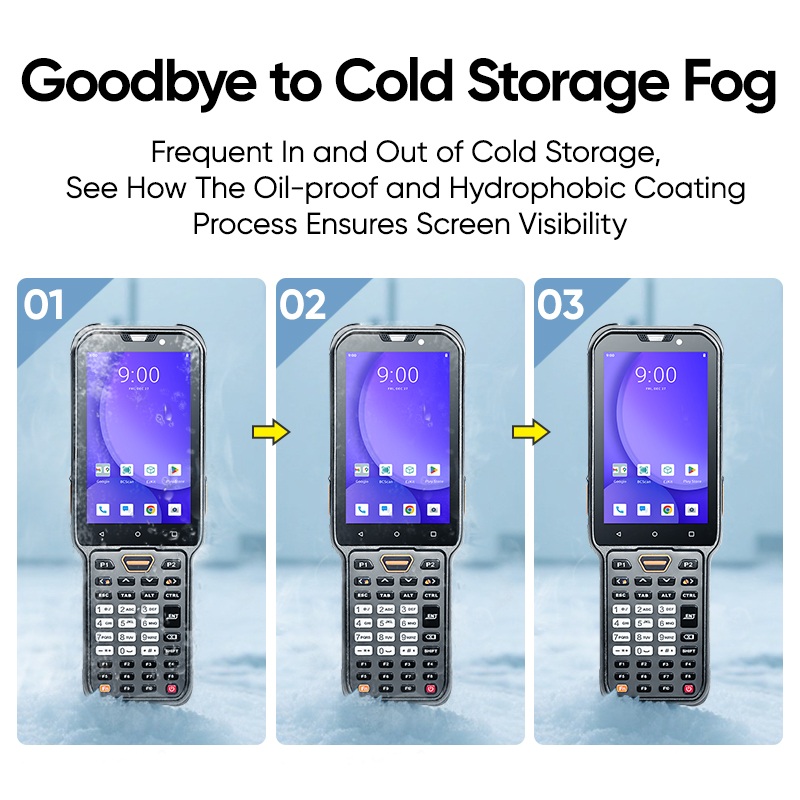
1.1 Extreme Cold Protection: Injecting "Cold-Resistant Genes" into Cold Chains

Industry Pain Points: In pharmaceutical and fresh food cold chains, low temperatures cause equipment failure, condensation leads to short circuits, and traceability chains break.

FYJ Solution: Using military-grade wide-temperature chips and specialized encapsulation processes, our RFID tags and readers operate reliably in extreme temperatures from -40℃ to 85℃. Combined with unique anti-condensation design and a cold chain monitoring platform, we enable end-to-end, uninterrupted traceability from storage to transportation, safeguarding every pharmaceutical product and fresh food item.

1.2 Dust and Contamination Defense: Maintaining "Keen Vision" in Extreme Pollution

Industry Pain Points: In coal, cement, and machining industries, dust and oil contamination cause dramatic drops in read rates.

FYJ Solution: All products meet IP68/69K protection ratings, featuring self-cleaning antenna designs. Specialized tags use nano-coatings and metal encapsulation, resisting pressure and corrosion while maintaining read accuracy over 99.9% even in the harshest industrial and mining environments.

1.3 Moisture and Corrosion Resistance: Building a "Corrosion Defense Moat" for Data Capture

Industry Pain Points: In chemical, port, and aquatic processing sectors, high humidity and salt spray cause rapid equipment corrosion and signal attenuation.

FYJ Solution: Through multi-layer composite protective coatings and vacuum sealing technology, FYJ equipment offers exceptional corrosion resistance. Our proprietary Environment-Adaptive Frequency Tuning Technology automatically optimizes communication parameters based on humidity changes, ensuring zero degradation in communication range even in damp conditions.

1.4 Vibration and Interference Resistance: Embedding "Anti-Vibration Genes" for Industrial Settings

Industry Pain Points: Continuous vibration and electromagnetic interference (EMI) in production lines and logistics hubs shorten equipment lifespan and compromise data accuracy.

FYJ Solution: Utilizing full potting and anti-vibration structural designs with triple-layer Electromagnetic Compatibility (EMC) protection, our devices operate stably under high-intensity vibration and complex EMI, providing reliable data support for smart manufacturing.



2. Beyond Hardware: The Value of FYJ’s Full-Stack Solutions

2.1 Rugged Product Portfolio

Specialized Tag Series: Comprehensive coverage including high/low-temperature resistant, anti-metal, and flexible anti-bending tags for all scenarios.

Industrial Readers: Full range of fixed, handheld, and vehicle-mounted devices to meet diverse deployment needs.

Dedicated Antenna Arrays: High-performance antenna combinations optimized for different environments.

2.2 Intelligent Software Platform

FYJ Data Capture Middleware: Intelligent filtering and deduplication, supporting concurrent processing of millions of tags.

Visual Monitoring Platform: Real-time display of device status, environmental data, and business metrics.

Open API Framework: Seamless integration with WMS, ERP, MES, and other enterprise systems.

2.3 Professional Service Network

Scenario-Based Solution Design: On-site environment assessment and customized planning.

End-to-End Implementation Support: Full-cycle partnership from installation and commissioning to maintenance training.

Rapid Response Mechanism: 7×24 technical support with 2-hour emergency response.

 

3. Systematic Enablement: Building FYJ’s Intelligent Ecosystem

At FYJ, we are committed to creating a trinity intelligent capture ecosystem:

3.1 Device-Edge Collaboration

Fixed RFID enables automated bulk capture + handheld PDA facilitates flexible mobile operations, building a comprehensive data perception network.

3.2 Sensing-Identification Integration

Integrating RFID with temperature, humidity, vibration, location, and other sensors to achieve full-dimensional monitoring of asset "identity-status-trajectory."

3.3 Cloud-Edge Intelligent Architecture

Edge computing handles local data in real-time + cloud platform performs deep analysis and intelligent decision-making, creating a layered intelligent data application system.

 

4. Industry Proof: Validating the Value of FYJ Solutions

In pharmaceutical cold chains, FYJ solutions help leading pharmaceutical companies achieve full temperature-controlled vaccine traceability with automated compliance reporting, improving efficiency by 300%.

In port logistics, our anti-salt-spray RFID system maintains a 99.5% read rate in humid environments, reducing container customs clearance time by 40%.

On smart manufacturing lines, the anti-vibration and anti-interference solution achieves 99.9% data capture accuracy, increasing Overall Equipment Effectiveness (OEE) by 25%.
 

Conclusion: Building Business Resilience Through Technological Resilience

In an era where uncertainty is the new normal, a company’s competitiveness increasingly depends on supply chain resilience and data reliability. With over a decade of deep experience in industrial scenarios, FYJ’s definition of "expertise" goes beyond durable products—it encompasses profound insight into industry pain points, technological conquest of extreme environments, and comprehensive protection of customer value.


Choosing FYJ means gaining not just a set of hardware devices, but a trusted digital partner. We stand with you to face environmental challenges, transforming weak links in data capture into strong foundations for competitive advantage.


Let FYJ Be Your Reliable Partner in Conquering Extreme Environments

Whether you operate in cold chain logistics, industrial manufacturing, or specialized warehousing, if you are seeking:


Stable data capture solutions for harsh environments

Intelligent upgrades for existing warehousing and logistics

Compliance traceability systems for specialized industries


The FYJ Professional Team Looks Forward to Creating Value with You


🌐 Visit Our Website: www.fyjaidc.com


FYJ — Ensuring Every Data Capture with Industrial-Grade Reliability, Powering Every Intelligent Upgrade.

 

-------------------------------------


RFID vs. Barcode How to Choose the Optimal Solution for Modern Warehousing/Inventory/Asset Management?

In the pursuit of efficiency and accuracy within modern logistics and supply chain management, the digital transformation of warehousing, inventory, and asset management is a core issue for businesses aiming to reduce costs and increase productivity. When discussing automatic identification technologies, RFID (Radio Frequency Identification) and Barcodes are the two dominant contenders, often pitted against each other. Faced with the need for business upgrades, how do we choose? Should we stick with the classic or embrace innovation?


This article will provide an in-depth analysis of these two technologies from multiple perspectives, helping you find the "optimal solution" best suited to your specific operational scenarios.


How They Work: One "Scans," the Other "Senses"

Barcode: Visual Recognition, Scanned One-by-One

The barcode is our most familiar "old friend." It encodes information through the width and spacing of black and white stripes, requiring an optical scanner (like a handheld terminal or fixed scanner) to be aimed directly at the code within a close, unobstructed line of sight for one-by-one scanning. It is, in essence, a "one-to-one" visual communication.


RFID: Radio Frequency Identification, Bulk Sensing

RFID is more like an "invisible butler." It consists of a tag, a reader, and an antenna. The tag contains a chip that can store more information and communicates with the reader via radio waves. Its most significant features are that it does not require line-of-sight and enables batch reading. A reader can instantly identify dozens or even hundreds of RFID tags within a certain range, even through materials like paper or wood.


Core Capability Comparison: The Trade-off Between Efficiency, Data, and Cost


Aspect Barcode RFID Advantage
Reading Method Line-of-sight, one-by-one, manual operation No line-of-sight needed, batch, remote, automatic reading RFID
Data Capacity Limited (typically tens of characters) Larger (up to several KB), rewritable RFID
Reading Speed Slow (relies on manual scanning) Extremely fast (millisecond-level batch identification) RFID
Env. Durability Susceptible to damage, smudging, obstruction Resistant to smudging, can be encapsulated, longer lifespan RFID
Automation Level Low, highly manual High, can be integrated into portals, conveyors for full automation RFID
Unit Cost Very Low (cents) Higher (passive tags: cents to dollars; active tags: more expensive) Barcode
Implementation Low, easy to deploy High, requires RF environment planning, can be interfered with by metal/liquids Barcode


Choosing by Scenario: Which is Your "Perfect Match"?

The choice isn't a simple technology showdown; it's a comprehensive consideration of business needs, budget, and Return on Investment (ROI).


Prioritize Barcodes, if:

Low item value, massive SKU count: e.g., FMCG retail, book management, where cost is the primary concern.

Low operation frequency, simple processes: e.g., point-of-sale checkout, sporadic inbound/outbound verification where manual scanning suffices.

Limited budget, need quick deployment: Want to achieve the initial leap from paper-based to digital at minimal cost.

Existing mature barcode system: Lack of strong motivation to upgrade, and the current system works well.


Prioritize RFID, if:

Extreme demand for counting efficiency: Full warehouse inventories for large facilities; RFID can reduce time from days to hours, enabling "cycle counts in seconds."

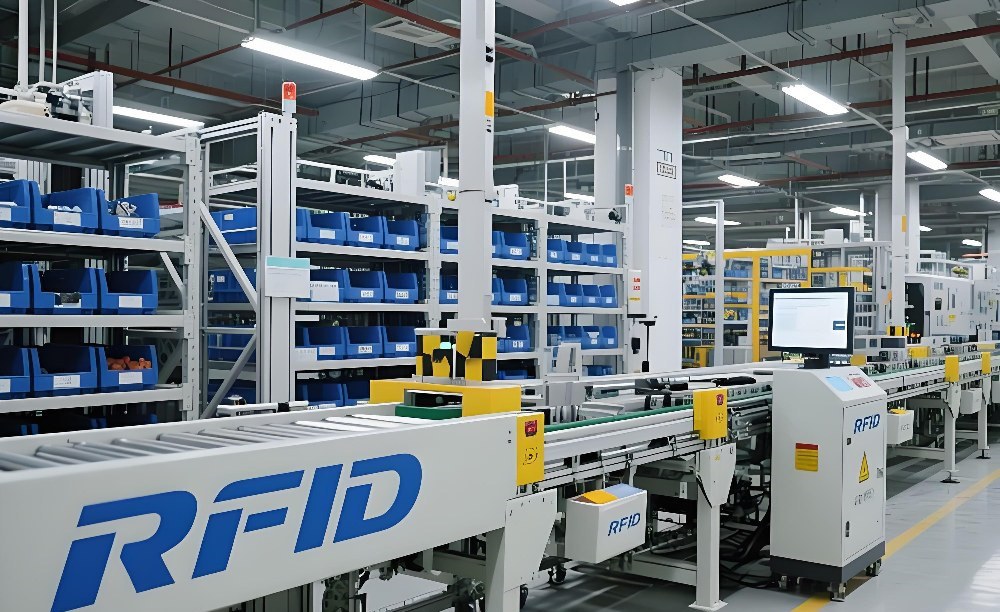
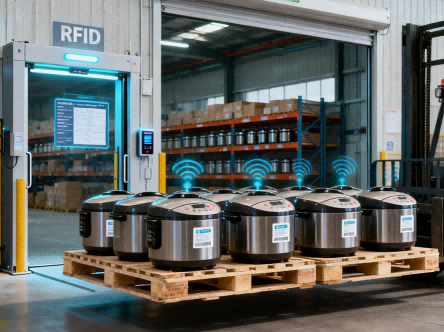
Pursuing automation in receiving/shipping: Deploy readers at dock doors or on conveyors; goods can be verified in batches without breaking down pallets or stopping, dramatically increasing throughput.

Managing high-value or critical assets: e.g., medical devices, tools, IT equipment, garment samples, requiring precise tracking, loss prevention, and historical traceability.

Complex processes needing enhanced visibility: e.g., Work-in-Progress (WIP) tracking in manufacturing, in-store management for apparel, requiring real-time knowledge of item location and status.


The Hybrid Approach: A 1+1>2 Strategy

In practice, many companies adopt a smart hybrid strategy:

RFID on outer cases/pallets, barcodes on inner items: Use RFID on logistic units (like full cases, pallets) in the supply chain for efficient flow, and use barcodes at the final retail and detailed management level. This balances efficiency and cost.

RFID for critical assets, barcodes for general items: Concentrate RFID investment where it's needed most to maximize its value.

Conclusion and Outlook

There is no absolute "better," only "more suitable."

The Barcode is the king of cost-effectiveness. With its extremely low cost and simple deployment, it will remain the cornerstone data carrier for most goods in the foreseeable future.

RFID is the efficiency revolutionary. Through its disruptive data capture method, it opens new doors for high-complexity scenarios requiring automation, real-time operation, and granular management.

When making a decision, it is advisable for businesses to start with a small-scale pilot project. For example, test RFID against the existing barcode solution in a warehouse for a high-value category or on a single production line, comparing efficiency gains and ROI. Let data drive the decision and let business needs guide the technology choice. This is the way to find the optimal path to modernize your warehousing and asset management.

The ultimate goal of technology is to serve business. Whether it's the classic barcode or the cutting-edge RFID, leveraging them effectively to make your goods and assets "speak" is the true essence of intelligent management.


The Efficiency Benefits of UHF RFID Reader in Fashion Stock Management

How UHF RFID Handhelds Are Redefining Apparel Inventory Control

For apparel retailers, inventory management efficiency directly affects profitability and service quality. Traditional counting methods are inefficient and inaccurate, but UHF RFID handheld devices provide a seamless, automated alternative.

Bulk Scanning for Streamlined Receiving & Shipping

While barcodes require line-of-sight scanning, UHF RFID technology captures multiple garment tags instantly—accelerating operations and reducing human error in logistics and retail environments.

Smarter Stock Tracking to Prevent Loss & Misplacement

RFID handheld terminals enable instant item location checks, ensuring garments are stored correctly—reducing lost inventory and maximizing storage efficiency.

Transform Stocktakes from Chore to Checkmark

What traditionally required teams of staff counting for days can now be completed by one worker in minutes using RFID scanning, with near-perfect accuracy.

Prevent Lost Sales with Smart Stock Alerts

RFID readers automatically flag low inventory, triggering instant replenishment to keep bestsellers always available - turning browsers into buyers.

Conclusion

UHF RFID technology solves apparel inventory's biggest challenges:

• Eliminates time-consuming manual counts

• Prevents costly stock discrepancies

• Optimizes warehouse/store layouts

• Ensures optimal product availability

Ready to turn inventory management from a cost center to competitive advantage? Let's discuss your RFID implementation roadmap!

Top 5 Mistakes Companies Make When Deploying RFID / AIDC Systems — And How to Avoid Them

In today’s wave of digital transformation, RFID (Radio Frequency Identification) and AIDC (Automatic Identification and Data Capture) technologies have become essential tools for businesses to enhance supply chain visibility, optimize inventory management, and accelerate process automation. However, many companies struggle during deployment due to insufficient preparation or misaligned expectations, often leading to underwhelming results or even project failure. This article breaks down the five most common pitfalls in RFID/AIDC system deployment and provides actionable strategies to avoid them, helping you navigate a smoother digital transition.


Mistake 1: Unclear Objectives, Lack of Defined Business Value

Many companies treat RFID/AIDC as a “must-have” trend without tying it to core business processes or specific goals—such as reducing stockouts, improving picking accuracy, or cutting asset inventory time. This results in undefined success metrics and difficulties securing ongoing support and resources.


How to Avoid It:

Before launching the project, conduct a thorough business needs analysis. Ask: “Why are we deploying this system? What specific problem does it solve? How do we measure success?” Set clear, quantifiable targets—for example, “increase shipping accuracy from 95% to 99.9%” or “reduce cycle count time from 4 hours to 30 minutes.” A solid ROI (Return on Investment) case is essential to secure buy-in and sustain project momentum.


Mistake 2: Skipping Real-World Testing and Poor Solution Selection

RFID performance is highly sensitive to the deployment environment. Metal surfaces, liquids, densely packed items, and varying tag materials can severely impact signal reliability. Many companies skip comprehensive pilot testing and purchase generic hardware and tags, leading to poor read rates and system instability in real-world conditions.


How to Avoid It:

“Test before you invest” should be the golden rule. Conduct on-site pilot tests using tags, readers, and antennas from multiple vendors. Evaluate performance under real conditions—different distances, angles, material types, and movement speeds. Select the right tag type (e.g., adhesive, rigid, on-metal, washable) and reader setup (fixed, handheld, portal) that best fits your operational environment.


Mistake 3: Inadequate Data Strategy and System Integration

If the massive amounts of data generated by RFID systems are not seamlessly integrated into core business platforms like ERP (Enterprise Resource Planning), WMS (Warehouse Management System), or MES (Manufacturing Execution System), they become isolated “data islands.” Simply tagging and reading items without automating business processes—such as auto-generating receipts or triggering replenishment alerts—drastically limits the technology’s value.


How to Avoid It:

1.Make data flow and process integration a central part of project design. Collaborate early with your IT team and solution provider to plan:

2.Data Interfaces: How to transform reader events (e.g., “Item A passed Location B at Time C”) into transactional data for business systems.

3.Middleware Role: Implement RFID middleware to filter duplicate reads, aggregate meaningful events, and deliver data in standardized formats.

4.Process Redesign: Review and optimize existing workflows to leverage automated data capture effectively.


Mistake 4: Underestimating Change Management and User Training

New technologies inevitably change how people work. If frontline staff don’t understand or accept the new system—or worse, fear job displacement or increased workload—they may resist or bypass it, undermining the entire initiative. Technology rollout is only step one; user adoption determines success.


How to Avoid It:

1.Embed change management throughout the project lifecycle.

2.Early Communication: Clearly explain the “why,” the goals, and how the system will affect daily tasks—emphasizing efficiency gains, not job replacement.

3.Involve Key Users: Engage operational staff in testing and process design to gather feedback and build ownership.

4.Comprehensive Training: Train users not only on “how” but also on “why” and “what happens if,” so they understand their role in maintaining data integrity.

5.Ongoing Support: Provide accessible technical support and clear escalation paths after go-live.


Mistake 5: No Plan for Long-Term Maintenance and Optimization

Many companies consider the project complete once the system goes live. However, RFID/AIDC systems require ongoing maintenance: tags can be damaged or detached, reader firmware needs updates, and business changes may require adjusted read points or logic. Without long-term operational planning, performance will degrade over time.


How to Avoid It:

1.Build a long-term maintenance and evolution plan from the start.

2.Assign Ownership: Designate an internal team or clarify vendor support responsibilities.

3.Schedule Regular Maintenance: Include equipment checks, read accuracy validation, and spare parts management.

4.Monitor Performance: Continuously track KPIs like read rates and system uptime, and set up alerts for deviations.

5.Plan for Scalability: Ensure the system architecture allows for future upgrades and adaptation to new business needs.


Simplify Deployment with an Integrated, Expert Approach

Avoiding these pitfalls is easier with the right partner. FengyiJie is a specialized provider of end-to-end RFID/AIDC solutions, offering integrated hardware and software systems designed to mitigate deployment risks:


1.Needs-Based Consulting: We start by understanding your operational environment and defining clear, measurable objectives to ensure technology delivers tangible business value.

2.Full-Cycle Testing & Validation: We provide comprehensive pilot testing and professional solution matching to ensure optimal performance in your specific setting.

3.Seamless Integration: Our mature middleware and extensive APIs enable smooth connectivity with your ERP, WMS, and other core systems, eliminating data silos.

4.Lifecycle Support: From training and go-live assistance to long-term maintenance and optimization, we provide end-to-end support to ensure system reliability and adaptability.


Take the Next Step with Confidence

Don’t let trial and error delay your ROI. Start your RFID/AIDC journey on the right track from day one.


[Contact us today to schedule a free consultation and request a tailored system trial.] Let’s work together to turn technological potential into your competitive advantage.


-----------------------------------------

What Exactly is RFID? How Does It Differ from Barcode Technology? Read This to Find Out!

What is RFID Technology?


In simple terms, RFID is a technology that gives physical objects their own "electronic ID." Using a reader, information can be read from a distance and without any physical contact, enabling highly efficient management.


Components of RFID Technology


The composition of RFID is quite straightforward, primarily consisting of three key components:

01 Electronic Tag

A miniature device that stores the target's information. It acts as a wireless ID card, receiving energy, parsing commands, and responding with data.

02 Antenna

The physical pathway for transferring energy and signals between the reader and the tag. It is responsible for transmitting and receiving these signals.

03 Reader/Writer

A digital transceiver that initiates communication, processes signals, and manages data exchange. It functions essentially as a "wireless card reader."


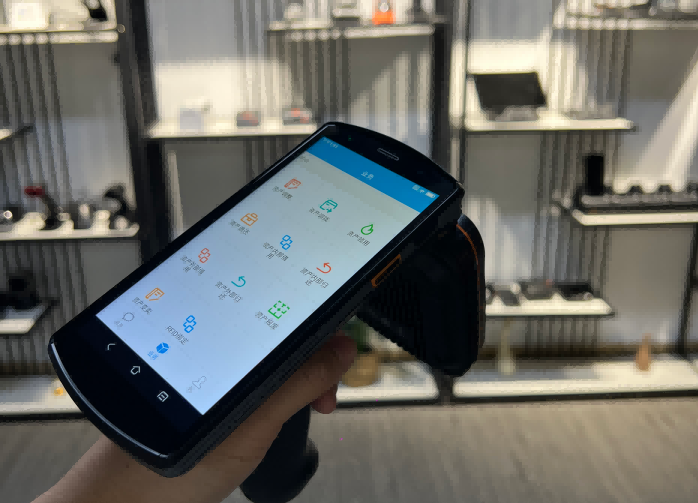
Common RFID devices we encounter include RFID handheld terminals, RFID printers, RFID gate antennas, and RFID fixed readers. These devices are not only capable of reading traditional barcodes but are also widely applied in scenarios such as logistics and warehousing, retail management, and asset tracking.


How It Differs from Barcode Technology


Compared to traditional identification methods like optical or barcode scanning, the simplest way to put it is: a barcode needs to be seen to be scanned, while RFID needs only to be sensed to be read.

The most fundamental differences are:

1.Method of Reading: Barcodes require a direct line of sight and must be precisely aligned with a scanner. In contrast, RFID tags are read via radio waves and do not need to be visually exposed or specifically oriented.

2.Efficiency: Barcode scanners can typically read only one item at a time. RFID readers, however, can identify and process multiple tags simultaneously in a single operation, enabling rapid batch reading.

3.Intelligence & Security: The information encoded in a traditional barcode is fixed and cannot be altered after printing. An RFID tag's stored data, however, can often be rewritten or updated electronically. Furthermore, RFID tags offer superior data security features, such as encryption and access controls.


Key Characteristics of RFID Technology


1.Contactless Identification: RFID technology requires no manual intervention and can operate effectively in various challenging environments.

2.High-Speed Reading: Capable of simultaneously identifying multiple tags and moving objects, ensuring quick and convenient operation.

3.Data Security: Data stored on RFID tags can be encrypted, providing robust protection for sensitive information.

4.Strong Environmental Resilience: RFID tags are designed to be waterproof, anti-magnetic, and heat-resistant, making them suitable for diverse application scenarios.

5.Long Service Life: RFID electronic tags can be used semi-permanently and support data updates and modifications.


Efficiency Comparison: Warehouse Inventory Scenario


RFID Inventory: Four personnel equipped with readers can complete the inventory by walking through the aisles once, finishing in half a day with an accuracy rate exceeding 99%. During inbound and outbound operations, RFID channels automatically register items, improving efficiency by 80%.

Barcode Inventory: Twenty-four personnel need to push ladders and use handheld scanners to scan items one by one. Accessing top shelves requires climbing ladders, while bottom shelves necessitate moving items aside. When barcodes are dirty or damaged, manual checks against records are required, resulting in longer processing times and an accuracy rate of approximately 90%.

Key Takeaways:

RFID enables “walk-and-scan” batch inventory and “touchless” automated inbound/outbound logging—essentially automated data capture. It frees staff from repetitive, manual aiming and positioning tasks, dramatically boosting speed and accuracy.

Barcode relies on “one-by-one” manual scanning—an inherently manual process. Efficiency is limited by personnel movement, item positioning, barcode quality, and the physical constraint of single-item scanning, making it time-consuming and error-prone.


Manufacturing Scenario


RFID Management: A quick scan with an RFID reader immediately identifies material models and quantities. Production lines do not require dedicated scanning points; semi-finished products automatically update their progress as they pass through each process step, reducing the rework rate from 8% to below 1%.

Barcode Management: When workers retrieve materials, barcodes often fail to scan due to misalignment or dirt, requiring manual reference to ledgers and increasing the risk of retrieving incorrect materials, which leads to defective products and rework. Production lines also require workers to stop and scan barcodes, which can easily cause bottlenecks in the workflow.

RFID transforms manufacturing into a continuous, data-driven flow, eliminating manual scanning bottlenecks and ensuring real-time traceability with minimal errors. Barcode systems, by contrast, remain prone to human error, scanning failures, and process interruptions, ultimately reducing overall production efficiency and quality.


Fixed Asset Management Scenario


RFID Management: A single scan with a handheld RFID reader can batch-read asset information, reducing the annual inventory cycle from 5 workdays to just half a day and increasing the asset record-to-reality match rate from 75% to over 99%.

Barcode Management: When QR code labels are worn, detached, or dirty, they become unscannable, often requiring manual checks against paper records or spreadsheets. This frequently leads to misidentified equipment or mismatches between records and actual assets, resulting in low inventory efficiency.

RFID enables rapid, accurate, and automated asset tracking, transforming inventory from a lengthy manual audit into a swift digital process. Barcode systems remain vulnerable to label degradation and manual lookup errors, resulting in slower operations and inconsistent record-keeping.


As a comprehensive RFID solution provider, our company possesses multiple proprietary core technologies and a rich software ecosystem. We offer a variety of RFID tools tailored to the needs of different industries and can provide customized, integrated hardware-software RFID solutions based on specific industry requirementsContact us for a free trial!


FC-TSDO-0824 Digital Output Module for Experion & TDC Systems

In today’s fast-paced industrial environments, reliable process control is more critical than ever. Automation systems must not only ensure efficiency but also maintain the highest levels of safety and accuracy. Among the many components that make this possible, the Honeywell FC-TSDO-0824 Safe Digital Output Module stands out as a versatile and dependable solution for digital signal control in process automation.

The “Why” Behind the Part Number

FC-TSDO-0824 is more than an alphanumeric jumble.

l FC = Field Connectivity—our guarantee of plug-and-play harmony with Series-C I/O.

l TSDO = Time-Synchronized Digital Output—every channel is disciplined to ±1 ms accuracy, perfect for coordinated shutdown sequences.

l 0824 = 8 ms scan + 24 channels, the sweet spot where speed meets density.

Seamless Integration with Experion and TDC Systems

The FC-TSDO-0824 module is designed to work seamlessly with Honeywell’s Experion PKS (C200/C300) and TDC2000/TDC3000 control systems. These platforms are widely recognized for their robustness and ability to handle complex industrial processes across sectors like chemical, petrochemical, power generation, and manufacturing. By integrating the FC-TSDO-0824, operators gain precise digital control over field devices such as valves, motors, and actuators, ensuring that every action aligns with process requirements and safety protocols.

Optimizing Process Control

Modern industrial plants rely heavily on precise digital communication between controllers and field devices. The FC-TSDO-0824 plays a pivotal role in bridging this gap. By delivering reliable digital outputs, it allows operators to implement advanced control strategies, including automated safety shutdowns, load balancing, and real-time process adjustments. This level of control is crucial in industries where even minor errors can lead to significant downtime or safety hazards.

Moreover, the module’s integration with Experion PKS and TDC systems provides operators with enhanced monitoring capabilities. Real-time diagnostics, combined with predictive maintenance insights, allow engineers to preemptively address issues before they escalate, reducing both downtime and maintenance costs.

Applications Across Industries

The versatility of the FC-TSDO-0824 module makes it ideal for a wide range of applications. In chemical and petrochemical plants, it manages critical process actuators, ensuring reactions and flows occur precisely as intended. In power generation, it supports turbine and boiler controls, maintaining energy efficiency and operational safety. Manufacturing lines benefit from its ability to coordinate motors and conveyors, optimizing production throughput while safeguarding equipment.

Honeywell FC-TSDO-0824 Specifications and Popular Models

Feature / Parameter

Specification / Detail

Notes / Application

Module Type

Safe Digital Output Module

Part of Controllers and I/O Series

Compatible Systems

Experion PKS (C200/C300), TDC2000, TDC3000

Digital control of actuators and field devices

Number of Outputs

Configurable digital channels

Supports multiple process devices

Safety Compliance

Compatible with Honeywell safety systems

Reduces operational risks

Operating Environment

Industrial-grade

Mission-critical plant applications

Maintenance

Hot-swappable module design

Minimizes downtime

Functionality

Converts system commands into digital output

Precise control of valves, motors, and actuators

Popular Related Modules

FC-TSDO-0816, FC-TSDO-0832

For various Experion/TDC configurations

Conclusion

For industries seeking precision, reliability, and safety in digital output control, the Honeywell FC-TSDO-0824 Digital Output Module is an indispensable component. Its seamless integration with Experion PKS and TDC systems, combined with its high safety standards, ensures that every process operation runs smoothly and efficiently.

For more information or to request a quote, contact Apter Power. Our expert representative, May, is ready to assist: sales8@apterpower.com. Enhance your process control systems with Honeywell’s trusted solutions today.

Improving Industrial Automation Efficiency GE IC693ALG221

Improving Industrial Automation Efficiency: GE IC693ALG221 Analog Current Input Module

In modern industrial automation systems, accurate data acquisition and reliable module performance are crucial for efficient production operations. Recently,

GE launched the IC693ALG221 analog current input module, making it a top choice for PLC system upgrades due to its high performance and stability.

This article will provide an in-depth analysis of its application from the perspectives of system maintenance, operating guidelines, and cost control.


Ensuring Long-Term Reliable Operation

l As the core analog input module for GE's 90-70 series PLCs, the IC693ALG221 supports multi-channel current input and enables accurate data acquisition.

Its design prioritizes module reliability, reducing the likelihood of failure during long-term operation.

l Preventive Maintenance: The module's built-in diagnostics detect input signal anomalies and channel faults in real time, providing timely alarms and preventing

unplanned production line downtime.

l Easy Replacement: The module's plug-in design eliminates the need for complex disassembly, simplifying maintenance. Maintenance personnel can quickly

replace a faulty module by following GE's standard operating procedures.

Simplified System Management

l To ensure efficient system operation, GE provides a detailed IC693ALG221 User Guide:

l Installation Preparation: Ensure the PLC power is off, correctly insert the module into the corresponding slot,

and check that the terminal connections are secure.

l Parameter Configuration: Configure the channel input range, current type, and filtering parameters using GE

Proficy or PLC programming software.

l Data Monitoring: The module features a built-in status indicator for real-time evaluation of input signal quality; the software

allows viewing of real-time and historical data for each channel.

l Fault Handling: When a module overload, short circuit, or signal anomaly occurs, the system automatically triggers an alarm,

allowing operators to quickly locate the problem based on the fault code.

Reduced Total Cost of Ownership

l In industrial automation, module procurement cost is only part of the overall investment. The IC693ALG221 also offers significant cost-effectiveness:

l Long Life: The highly reliable design reduces the need for frequent replacements and lowers maintenance costs.

l Modular Management: Flexible expansion or replacement of single-channel modules eliminates the need to replace the entire system.

l Reduce downtime losses: Accurate data collection and diagnostic functions reduce production line downtime,indirectly saving operating costs.

IC693ALG221 Core specifications

Module Type: Analog Current Input Module

Model: IC693ALG221

PLC Compatibility: GE 90-70 Series PLCs

Number of Input Channels: 4

Input Type: Current (4–20 mA standard industrial signal)

Input Resolution: 16-bit

Sampling Rate: Approximately 20 ms/channel

Measurement Accuracy: ±0.1% FS (Full Scale)

Input Impedance: 250 Ω (accepts standard 4–20 mA signals)

Channel Isolation: Optical isolation for enhanced noise immunity


For further information, please contact Sales Manager May E-mail: sales8@apterpower.com

In-depth analysis of the 6ES7231-0HC22-0XA0 A key module for improving PLC performance and system life

Siemens 6ES7231-0HC22-0XA0 Analog Input Module: Accurate Signal Acquisition, Boosting System Stability and Cost Optimization

As a leading global provider of industrial automation and digitalization solutions, Siemens' SIMATIC S7 series holds a core position in the automation control

field thanks to its high reliability and flexibility.

The 6ES7231-0HC22-0XA0 analog input module (EM 231) is a high-precision input expansion module designed specifically for the S7-22X CPU series.

It provides four analog inputs (0–10V DC) and features high-precision signal conversion with 12-bit resolution, providing accurate and stable data support for

process control systems.

l Product Model 6ES7231-0HC22-0XA0

l Product Type: Analog Input Module (EM 231)

l Applicable to S7-22X CPU Series

l 4 analog input channels

l Input signal range: 0–10V DC

l Conversion accuracy: 12 bits

l Module Function: Signal acquisition and data conversion

l Mounting method: DIN rail

l Manufacturer: Siemens

Fault Diagnosis and Maintenance Optimization

The 6ES7231-0HC22-0XA0 module monitors input signal status in real time during system operation. Combined with the diagnostic functions of the S7 series,

users can quickly identify problems such as signal interruptions, input anomalies, and voltage drift.

Online monitoring via programming software (such as STEP 7-Micro/WIN) significantly improves fault response speed and reduces downtime.

Typical diagnostic scenarios include:

l No signal response on the input channel → Check the sensor and wiring status;

l Abnormal input voltage fluctuations → Identify power supply and signal interference sources;

l Analog signal drift → Restore accuracy by calibrating the module or replacing the sensor.

This preventive maintenance and rapid diagnostic capability not only improves equipment stability but also provides technical support for the long-term

reliable operation of the production line.

Extending System Life and Improving Performance

The module utilizes industrial-grade components, offering electromagnetic interference immunity and high-temperature stability, enabling long-term,

stable operation in complex industrial environments.

Combined with the signal processing algorithms of the S7-22X CPU, the system's overall data acquisition accuracy and response speed are optimized,

reducing equipment wear and unplanned downtime.

Through regular testing and module status monitoring, enterprises can extend system life by over 20% while ensuring continued process control accuracy.

Cost Control and Return on Investment

Module-level optimization often yields significant cost savings in automation projects.

The 6ES7231-0HC22-0XA0 module supports plug-and-play expansion, reducing the purchase and maintenance costs of external signal conversion equipment.

Its stable performance and easy maintainability significantly reduce downtime losses caused by failures while simplifying spare parts inventory management,

resulting in higher total cost of ownership (TCO).

Key savings include:

Reduced maintenance and calibration frequency;

Extended system component lifecycle;

Increased production line availability;

Reduced need for on-site manual intervention.

Application Areas

This module is widely used in the following areas:

Industrial automation production line monitoring; Process control and energy management systems; Environmental monitoring and building automation; Food,

packaging, and pharmaceutical machinery control.

Its precise analog data acquisition capabilities make it an indispensable signal acquisition unit in smart factories.

Summary

The Siemens 6ES7231-0HC22-0XA0 analog input module, with its high precision, high stability, and easy maintenance, brings enhanced reliability and cost competitiveness

to automation systems.

As companies pursue long system life, low maintenance, and efficient production, this module is undoubtedly a crucial component in achieving intelligent manufacturing goals.

Learn more>>>>

Sales Manager May

E-mail: sales8@apterpower.com

Phone: +86-18106909650 whatsapp

ABB PU516 3BSE013064R1 The powerful core of the control system

In the field of industrial automation, ABB has always been synonymous with high performance and high reliability. As the core processor of ABB AC 800M control system, PU516 3BSE013064R1 has become the preferred solution for many key industries with its excellent computing power and system stability.

Produced by ABB, stable performance
PU516 is a powerful main processing unit that supports complex control logic and multiple industrial communication protocols. It can be seamlessly integrated with ABB’s own modules (such as S800 I/O, communication modules and power modules) to build an efficient and flexible control system architecture.

Product highlights:
ABB original, global unified standard
Compatible with ABB Control Builder engineering platform
Support PROFIBUS, Modbus, Ethernet/IP communication
Applicable to redundant control systems to improve reliability
Easily integrated into ABB’s full set of automation solutions


Widely used, intelligent drive
PU516 is widely used in ABB process control systems, covering power, water treatment, chemical, oil and gas and other industries. Its modular design is not only easy to expand and maintain, but also in line with ABB's overall strategy to promote intelligent manufacturing.

Core parameter overview:
Model: PU516
Order number: 3BSE013064R1
System platform: ABB AC 800M
Support tool: ABB Control Builder
Interface: Ethernet, serial port, bus
Function: logic control, data processing, redundancy support

Summary

If you are looking for a stable, efficient and easy-to-integrate control processor, ABB PU516 3BSE013064R1 will be your ideal choice for industrial automation system. Relying on ABB's global service system and technological advantages, it lays a solid foundation for future smart factories.


HOT SEARCH


DUNGS DMV-VEF512/11 S12 DMVVEF51211S12
SIC MARKING E6 REV. C 17051
KEB 09.F4.S1D-1220/1.2 09F4S1D122012
ROYAL VARISET EPA3001-G EPA3001
TRUMPF TLS_18-12-34-P1_V01 030287
PLASMO 82-004
KEB F5 07F5S1A-YA00 4-008-39-1524
SUN DTDAXCN224
GT2505HSVTBD GOT2000
HBM T5 100Nm 2mV 210313051 1-T5/100NM
LEUKHARDT DIALOG 8-F 8F 6307025
SICK C40E-0901BN310
6SE92127DA40
B&R 8LVA22.R0030D000-0
DS403-RS
DS403IN
FRA84000380260
PPBE0622
SH-10

BALLUFF BTL2-P1-0450-F-S50
SIEMENS 6GK5204-0BS00-2NA3
BOSCH CNC SERVO 047826-204401 047927-2027
SIEMENS 570534.0003.02 840C 6FC5103-0AE01-0AA1
MSI GmbH FSS 3.5 S FLOPPY-SUBSYSTEM FSS3.5
B&R SV2LST11-1/3
CEV65M10580
BERGER LAHR IFA62/2DP0ISDS/5DC-I54/2-012KPP54
D1CAD4K32011G200D
SIEMENS 6SL3040-1LA00-0AA0 CU310-2
ATLAS COPCO 1426695 87288.000001 80619.000032
12F5B1B350A
MURR 58841 M12L 4P
QVG05EM 0133913/L11
SICK OD2-P85W20C0  6036615
BILANCIAI DD700 T11617
ZELLWEGER 9125 09125
R88MG20030HBS2
5AP981.1505-01

Explore the power of Bently Nevada 330101-00-25-10-02-00 probes

In modern industry, real-time monitoring of equipment operating status is essential to ensure production continuity, reduce maintenance costs and improve safety. As a global leading supplier of machinery condition monitoring solutions, Bently Nevada has long been a trusted brand of choice for many companies.

About Bently Nevada
Bently Nevada, a subsidiary of Baker Hughes, is one of the earliest companies in the world to focus on rotating machinery condition monitoring and protection systems. Its products are widely used in industries such as power, petrochemical, natural gas, manufacturing and marine engineering, and are particularly well-known for their high-precision vibration monitoring equipment.


  • Established for more than 60 years, with profound technical accumulation


  • Focus on predictive maintenance (PdM) and condition monitoring (CM)


  • Representative products: 3300 series, 3500 series, Proximitor probe, Trendmaster system, etc.

330101-00-25-10-02-00 probe details

330101-00-25-10-02-00 is a specific model of Bently Nevada 3300 XL series near-field probe, designed for non-contact vibration and displacement measurement in harsh industrial environments.

Technical parameter overview:
Parameter Item
Description
Model
330101-00-25-10-02-00
Probe length
25 feet (7.6 meters)
Sensitivity
200 mV/mil (7.87 mV/μm)
Measurement range
80 mil (2 mm) typical
Mounting thread
1/4-28 UNF
Compatible equipment
3300 XL extension cable + proximitor monitor (such as 3300XL 8mm system)
Application field
Shaft displacement, shaft vibration, eccentricity, thermal expansion monitoring, etc.
The probe adopts double shielded cable and corrosion-resistant shell. It not only works stably in places with severe electromagnetic interference, but also can operate for a long time in extreme temperatures and harsh environments.


Application scenarios
Bently Nevada 3300XL series probe system (including 330101 model) is widely used in the following industrial equipment:

  • Steam turbines, compressors, pumps, fans
  • Gearboxes, centrifuges, generators
  • Bearing monitoring and shaft centerline analysis of high-speed rotating equipment


Why choose Bently Nevada?

  • High reliability: world-class sensor manufacturing process, field service life up to decades
  • Global service network: spare parts support and engineer team all over the world
  • Strong data compatibility: support integration with SCADA, PLC, DCS, historical database
  • Compliant with ISO/IEC standards: meet API 670 specification requirements


Conclusion
If you are looking for a stable and accurate vibration monitoring sensor, Bently Nevada 330101-00-25-10-02-00 is undoubtedly your trustworthy choice. With Bently Nevada's deep technical accumulation in the field of industrial monitoring over the years, it is helping global companies shift from "post-maintenance" to "predictive maintenance" and move towards a new era of more efficient and intelligent equipment management.

If you are interested in Bently Nevada's product line or need a customized selection solution, please contact us for professional support!


Recommended Products at a Glance

In addition to Bently Nevada's 330101-00-25-10-02-00 probe, we have carefully selected several popular products that perform well in automation, process control, analytical instruments, and industrial maintenance:

MVME162-522A
NlRECO TSA1000
H411I2A PB0506
H761I2 PB0507
LWN2660-6
THEMIS VME USPIIe-USB
IS200EDCFG1B
ASP300 s
E4809-436-049
E4809-770-052-B
E4809-770-053-B
E4809-436-047-B
Promega quantus
POS10001.01
VCU-lite
IC694BEM331A
WERAC WGN 100-1
MADOKA MR-DPD-021
GRAF-SYTECO AT7100
5AP920.1906-K08
DS200RTBAG3AHC
531X305NTBAPG1
IS220UCSAH1A
Herrmann 35khz CV