Why Choose the DPM Code Scanning Mobile Computer F9832 for Industrial Traceability?

The Challenges of DPM Code Scanning in Industrial Environments


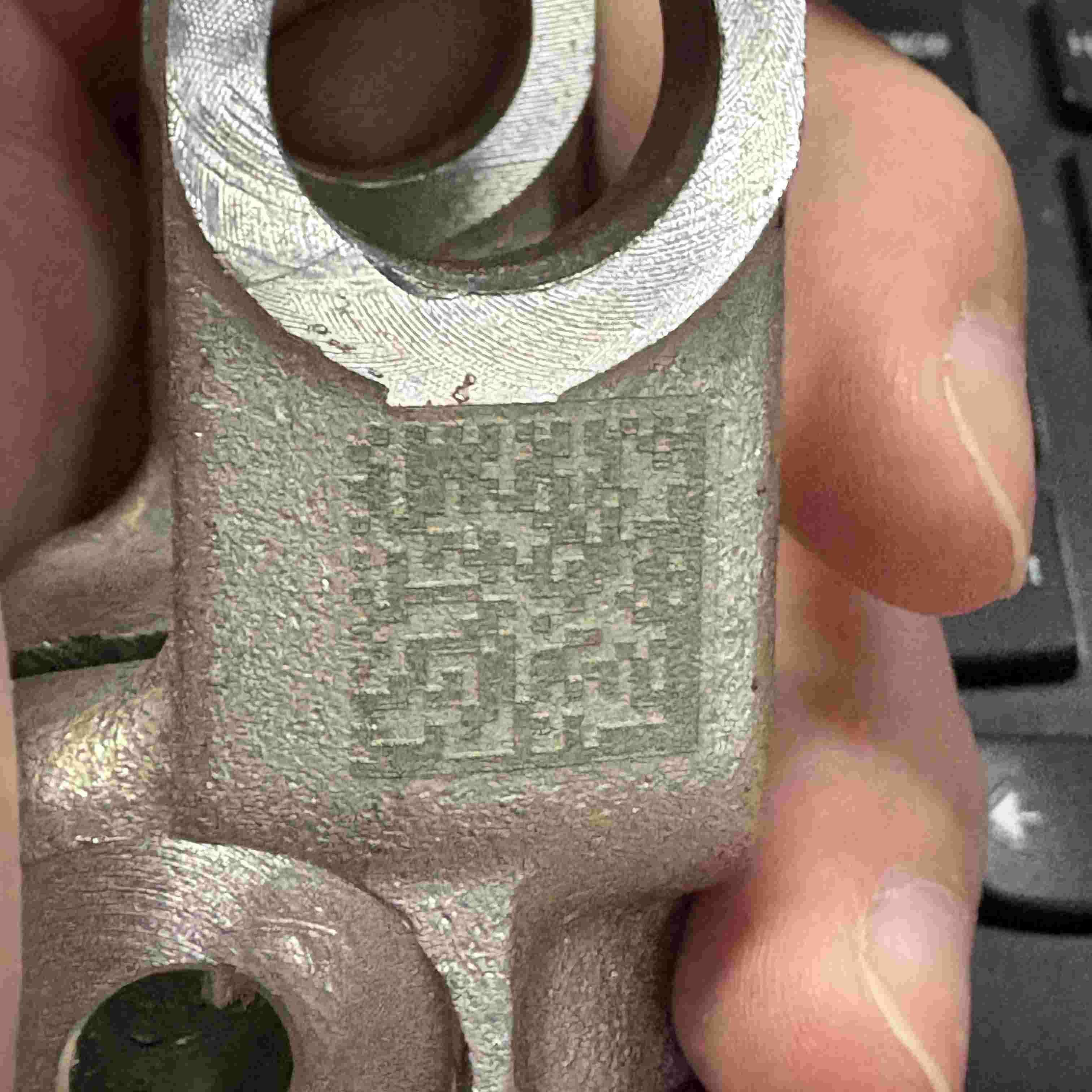
In industries like automotive, electronics, and logistics, direct part marking (DPM) codes—laser-etched or dot-peened on metal surfaces—are critical for traceability. However, common pain points include:


Low readability due to reflective surfaces, curved shapes, or tiny code sizes (e.g., 1.2x1.2mm)7.


Slow scanning speeds causing production bottlenecks (e.g., traditional devices take 70ms for 1D codes vs. F9832’s 13ms)1.


Device fragility in harsh environments, leading to frequent repairs and downtime6.


Incompatibility with gloves or wet conditions, limiting operational flexibility5.


For global manufacturers, these issues translate to higher costs, delayed deliveries, and compliance risks.


Solution: The F9832 DPM Code Scanning Handheld Terminal


Engineered for industrial resilience and precision, the F9832 addresses these challenges with:


Advanced DPM decoding: Proprietary algorithms and multi-light illumination (white/red/blue) adapt to reflective, curved, or low-contrast surfaces, achieving 99%+ accuracy even on 1.2mm codes.


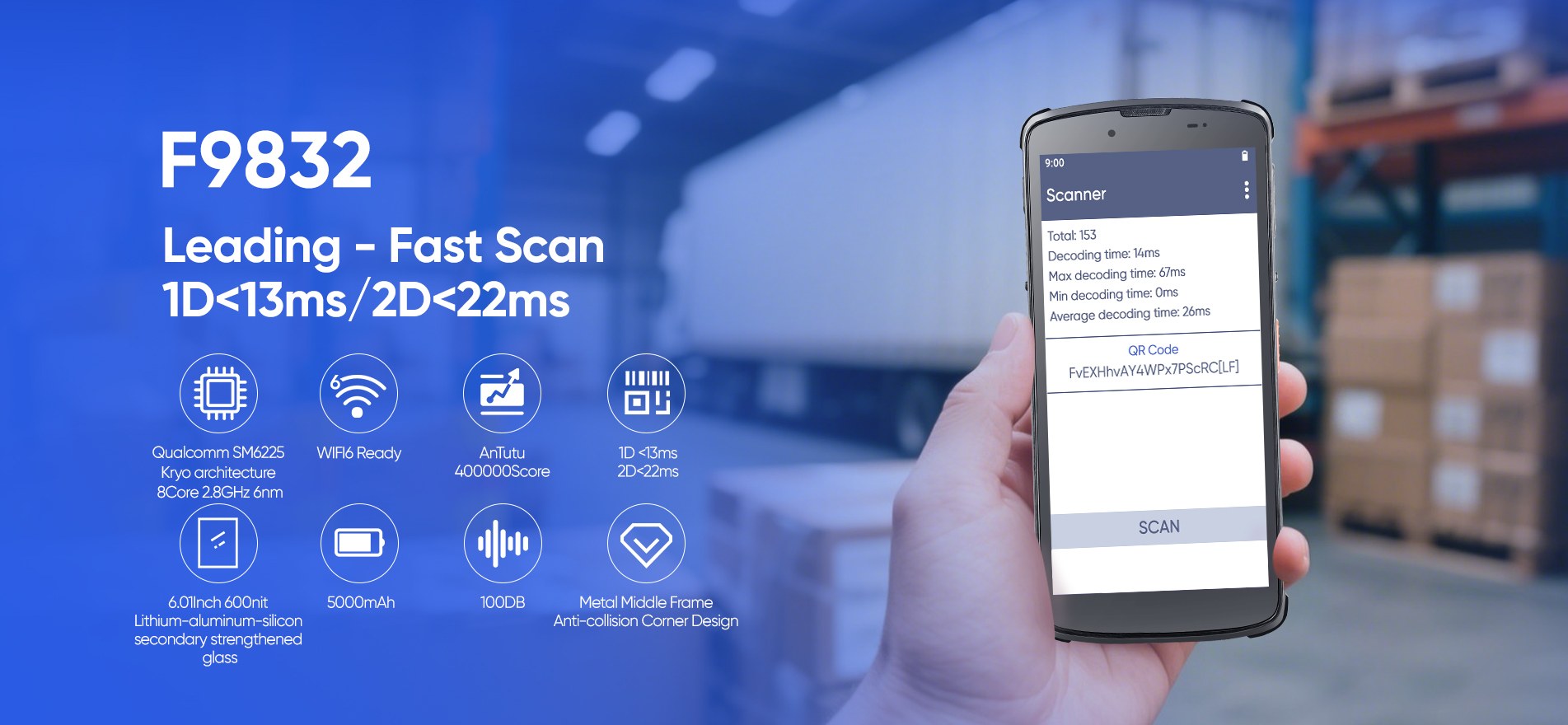
Ultra-fast scanning: 13ms for 1D codes and 22ms for 2D codes—up to 6x faster than competitors.


Rugged design: IP65/IP67 ratings, 1.5m drop resistance, and 10,000+ drop tests ensure durability in extreme conditions.


Glove- and water-friendly operation: Industrial-grade capacitive touchscreen and sealed ports enable reliable use in wet or dusty environments.


As a leading handheld terminal supplier, FYJ ensures compliance with ISO certifications and offers OEM services for tailored integrations.


Technical Specifications: Built for Industrial Demands


The F9832 combines cutting-edge hardware and software:


Processor: Qualcomm Snapdragon SM6225 (8-core, 2.8GHz) for seamless multitasking.


Battery: 5000mAh with QC3.0 fast charging, supporting 24-hour continuous use.


Connectivity: Wi-Fi 6, Bluetooth 5.0, and 4G LTE for real-time data sync.


Display: 4.0” IPS screen with glove/wet-touch support.


Certifications: CE, RoHS, IP65/67, and ISO 9001 for global compliance.


This industrial mobile computer for DPM code is ideal for automotive part tracking, pharmaceutical serialization, and warehouse management.
 

DPM Code Scanning Mobile Computer F9832


Client Case Study: Streamlining Automotive Manufacturing


A European automotive supplier faced 30% rework rates due to unreadable DPM codes on engine components. After deploying the F9832:


Scanning efficiency improved by 50%, reducing assembly line delays.


Rework costs dropped by 80% thanks to 99%+ read rates on curved metal parts.


Battery life exceeded 20 hours, eliminating shift-change downtime.


The client now uses F9832 across 15 factories, citing its “unmatched reliability in harsh environments”.


FAQ: Addressing Key Concerns


1.Is it suitable for medical-grade applications?

Absolutely. A medical edition with antimicrobial coating and ISO 13485 compliance is available.


2.How does it handle tiny DPM codes?

Its 130MP BSI sensor and sBoost algorithm enhance clarity for sub-2mm codes.


3.What certifications ensure global acceptance?


CE, RoHS, FCC, and ISO 9001/13485 certifications guarantee compliance.


Upgrade Your Traceability with the F9832


As a trusted mobile computer supplier, FYJ delivers DPM PDAs handheld devices for industrial use that balance speed, durability, and precision. Request a demo today to see how the F9832 transforms your operations.



PDA Supplier

-end-

Why Choose the F9825M Healthcare Mobile Computer for Global Medical Operations?

Pain Point Scenario


Healthcare facilities worldwide struggle with manual data entry errors, frequent device failures in corrosive environments, and non-compliance with UDI regulations. These inefficiencies delay patient care, increase costs, and expose organizations to regulatory risks.


Healthcare facilities worldwide struggle with manual data entry errors


Solution: F9825M Healthcare Mobile Computer


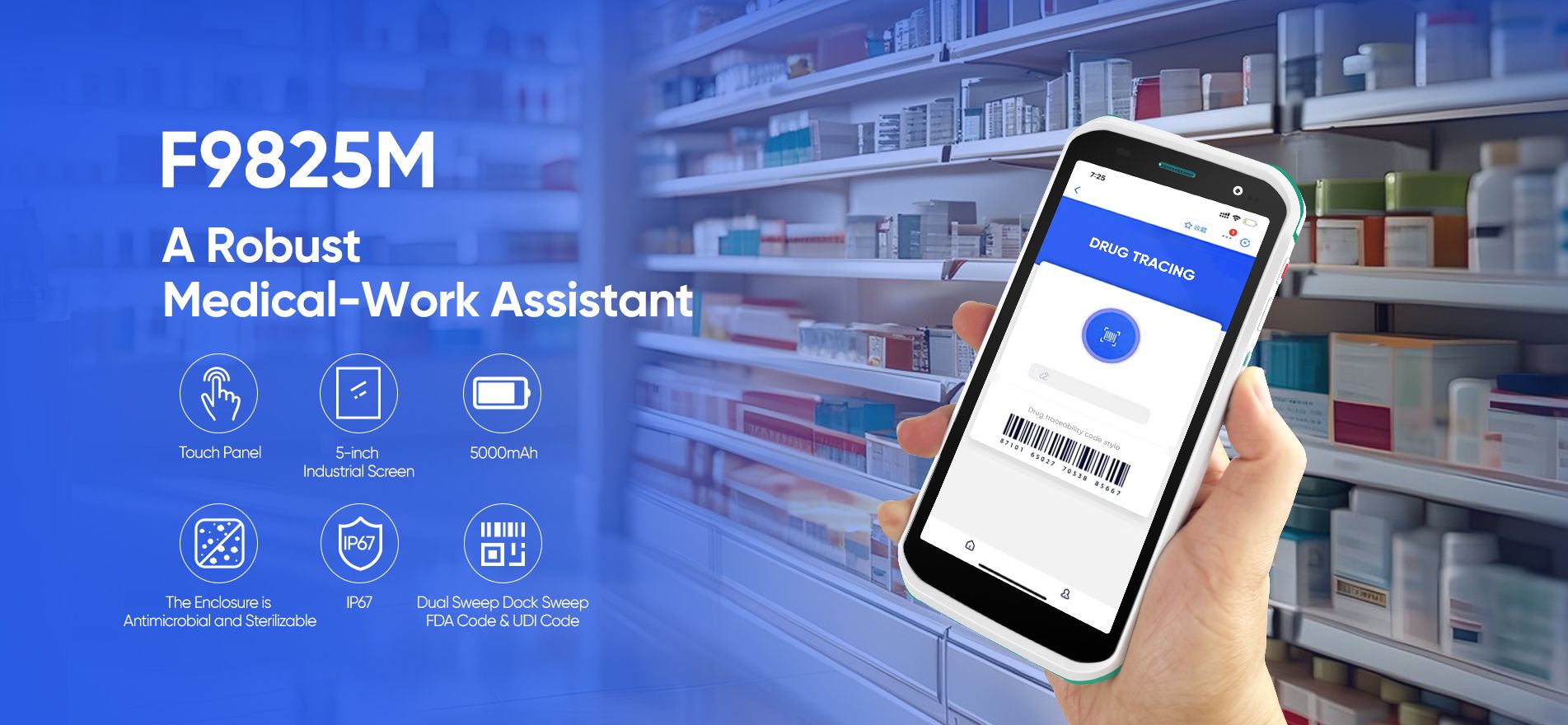
Built for medical precision, the F9825M combines chemical-resistant IP67 housing with dual-mode barcode scanning (Pharmacode + UDI). Seamless integration with hospital management systems eliminates manual workflows, while its OEM service flexibility ensures tailored solutions for diverse needs.


F9825M Healthcare Mobile Computer


Technical Specifications


Scan Speed: 200 scans/sec (2x faster than competitors)


Compliance: Full UDI (GS1/HIBCC) + ISO 13485 certification


Durability: Resists alcohol, bleach, and extreme temperatures


Battery Life: 18-hour runtime for uninterrupted shifts


F9825M Healthcare Handheld Terminal


A German hospital chain adopted the Industrial Mobile Computer for hospital workflows. Results:


  • 40% faster medication dispensing


  • 95% reduction in scanning errors


  • $50K annual savings on device maintenance


Industrial Mobile Computer for hospital

FAQ Section


Q: Does the F9825M support legacy hospital software?

A: Yes. Its PDA handheld device for medical use integrates with 50+ systems, including Epic and Cerner.


Q: How does ISO certification ensure quality?

A: ISO 13485 compliance guarantees adherence to global medical device safety standards.


Q: Can it withstand disinfectants?


A: The chemical-resistant shell survives daily exposure to harsh cleaning agents.


As a trusted mobile computer supplier, FYJ offers free consultations and customized OEM solutions


[Contact Us] for a demo!


healthcare mobile computer supplier


-end-

Why Is the F9825 Mobile Computer the Top Choice for Warehouses in Europe and the United States?

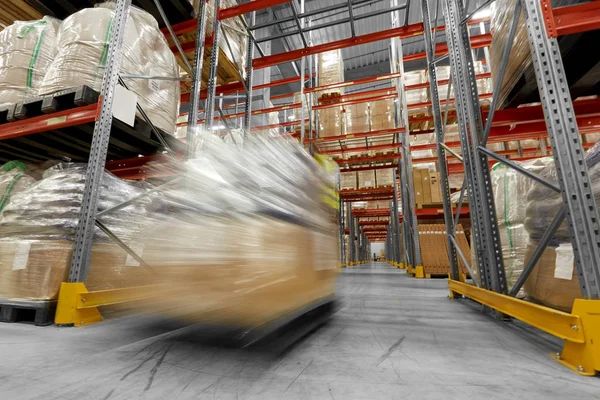
European and U.S. logistics hubs face challenges like network congestion, frequent device breakdowns, and inefficient inventory tracking. Over 60% of warehouses report delays due to outdated handheld devices, while harsh environments shorten equipment lifespan. Can a single mobile computer solve these issues?


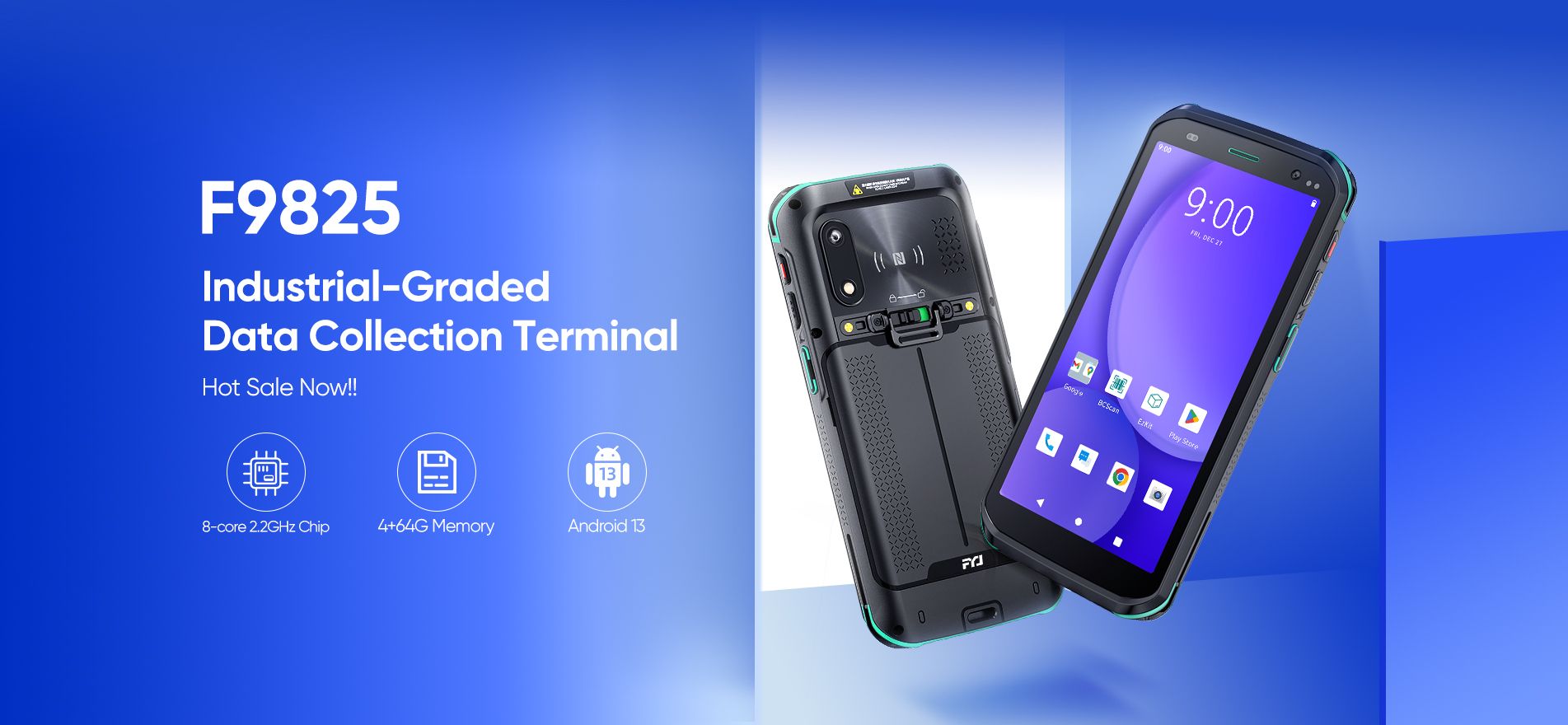
FYJ F9825 Mobile Computer

The F9825 combines flagship scanning tech, rugged design, and seamless connectivity to tackle warehouse inefficiencies. As a trusted mobile computer supplier, Hyatta Digital ensures ISO-certified manufacturing and OEM service flexibility. From cold storage to cross-dock operations, this industrial mobile computer for warehouses adapts to demanding workflows.


Technical Parameters

Feature F9825 Competitors
Battery Life 14 hours (hot-swappable) 8-10 hours
IP Rating IP67 (dust/waterproof) IP54
Scanning Speed 5 scans/sec (dense barcodes) 3 scans/sec


Why It Wins: Built for 24/7 logistics, the PDA handheld device for logistics excels in extreme temperatures (-20°C to 50°C) and offers Bluetooth 5.2 for stable connectivity.


Client Case Study

A German automotive logistics provider reduced scanning errors by 40% after deploying F9825 industrial mobile computers. “The extended battery life eliminated downtime during shifts,” shared their operations manager. In the U.S., a retail chain cut inventory costs by 25% using its OEM service for custom firmware.


FAQ Section

Q: Is the F9825 compatible with legacy warehouse systems?
A: Yes. It integrates with ERP, WMS, and IoT platforms via open APIs.

Q: How does ISO certification benefit buyers in Europe?
A: It guarantees compliance with EU safety and environmental standards.

Q: Can the device survive drops on concrete floors?
A: The F9825’s MIL-STD-810G rating ensures 1.5-meter drop resistance.


-end-

How Crystal Oscillators Empower Smart Factories

As Industry 4.0 continues to advance, smart factories are emerging rapidly around the world. Automation, the Internet of Things (IoT), edge computing, and artificial intelligence are transforming manufacturing processes. At the heart of these innovations lies a tiny but vital component: the crystal oscillator. It plays a critical role in ensuring the precise and stable operation of smart factory systems.


Key Roles of Crystal Oscillators in Smart Factories

  • Precise Synchronization and Stable Communication

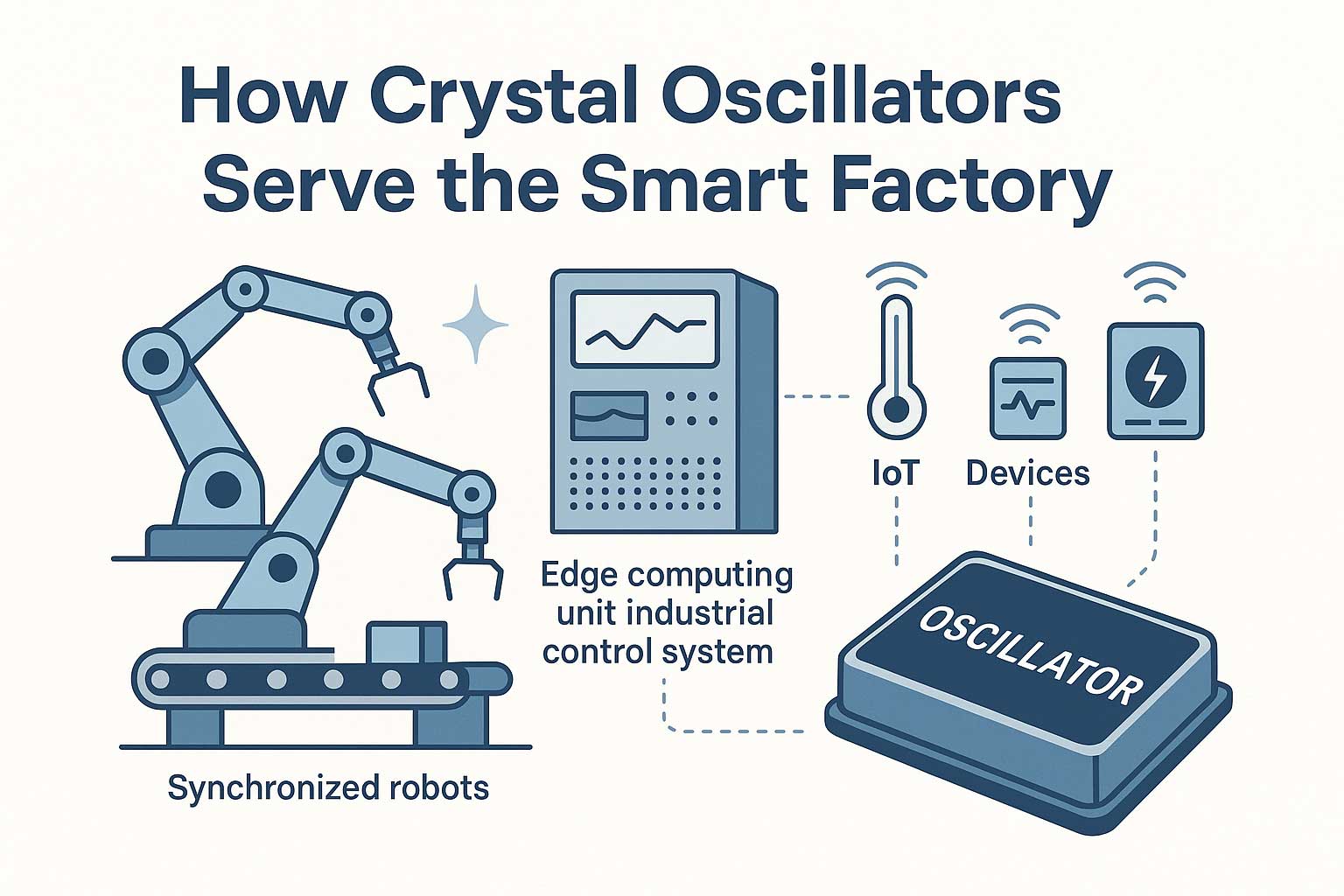
Smart factory devices such as robots, sensors, and control systems require highly accurate synchronization. Crystal oscillators provide stable and reliable frequency signals for clock modules, enabling seamless system coordination. For example, in industrial Ethernet and wireless communication modules, signal stability directly impacts data accuracy and real-time performance.

  • Timing Sources in Edge Computing and Control Systems

Crystal oscillators serve as the foundational clock sources in edge computing units and PLC controllers. Their frequency stability ensures accurate processing and swift system responses, making them essential for intelligent decision-making at the machine level.

  • Reliable Operation of IoT Terminals

IoT devices deployed throughout smart factories—such as temperature sensors, vibration monitors, and power meters—depend on high-precision crystal oscillators to drive their microcontrollers. These ensure accurate data acquisition and timely cloud reporting, enhancing factory responsiveness and automation.

  • Driving Systems in Industrial Robots and Automation Equipment

Industrial robots require high-frequency, low-jitter clock signals to precisely control servo motors and positioning systems. Temperature-compensated (TCXO) and voltage-controlled (VCXO) oscillators are especially suitable for these applications, maintaining excellent frequency stability even in harsh environments.


Why Choose JGHC Crystal Oscillators?

JGHC specializes in high-reliability crystal oscillators tailored for industrial automation, smart manufacturing, and IIoT applications. Our products offer:

    • Wide operating temperature ranges, ideal for challenging industrial conditions

    • High frequency stability, ensuring dependable long-term performance
    • Various package options, compatible with a wide range of embedded systems
    • Custom frequency services, tailored to specific application needs

Conclusion

Though small in size, crystal oscillators are fundamental to the reliable operation of smart factories. As manufacturing continues to evolve toward intelligent systems, the demand for high-performance oscillators will only increase. JGHC is committed to delivering premium-quality oscillators that support the global shift to smart manufacturing.

Industrial robot installation volume hits a new high, and automated factories become a trend

Against the backdrop of the global manufacturing industry accelerating its transformation to intelligentization, industrial robots are becoming the core force driving industrial upgrading. The latest data shows that the installation volume of industrial robots continues to rise, setting new highs. At the same time, automated factories are springing up like mushrooms after rain, gradually becoming an inevitable trend in the development of the manufacturing industry. This transformation not only profoundly changes the traditional production model, but also injects strong impetus into the future development of the global manufacturing industry.


Industrial robot installation volume hits a new high

In recent years, the industrial robot market has shown explosive growth. According to a report released by the International Federation of Robotics (IFR), the annual installation volume of global industrial robots has maintained a double-digit growth rate in the past few years, and in [specific year] it has set a record high, with a total installation volume of [X] million units. Among them, the Chinese market has performed particularly well, becoming the world's largest industrial robot consumer market for many consecutive years, with annual installations accounting for nearly [X]% of the global total.
Industrial robots are increasingly widely used in many industries such as automobile manufacturing, electronic information, and mechanical processing. On the automobile production line, welding, spraying, assembly and other processes that originally relied on manual labor are now mostly completed efficiently and accurately by industrial robots. Electronic manufacturing companies have also introduced industrial robots for precision operations such as chip packaging and circuit board assembly, which has greatly improved product quality and production efficiency. This wide application has driven the installation volume of industrial robots to continuously break new highs and become an important indicator of the development of the manufacturing industry.


Multiple factors driving the growth of installed capacity

The substantial increase in the installed capacity of industrial robots is the result of the combined effect of multiple factors. On the one hand, the continuous rise in labor costs has prompted companies to seek automation solutions. With the gradual disappearance of the demographic dividend, the proportion of labor costs in the production costs of enterprises has continued to increase, and the application of industrial robots can effectively reduce labor costs, improve production efficiency, and help companies maintain their advantages in the fierce market competition.
On the other hand, the continuous advancement of technology has made the performance of industrial robots increasingly improved. Today's industrial robots not only have higher precision and stability, but also have stronger flexibility and intelligence. Through the deep integration of technologies such as artificial intelligence and the Internet of Things, industrial robots can achieve autonomous decision-making, fault diagnosis and remote control, better adapt to complex and changing production environments, and meet the diverse production needs of enterprises.
In addition, governments of various countries have also introduced policies to support the development of the industrial robot industry, providing support from various aspects such as financial subsidies, tax incentives and industrial planning, creating a good policy environment for the prosperity of the industrial robot market.


The rise of automated factories reshapes the manufacturing industry

With the continuous increase in the installed capacity of industrial robots, automated factories are gradually becoming the mainstream production mode of the manufacturing industry. Automated factories integrate a large number of industrial robots, automated equipment and advanced control systems to achieve a high degree of automation and intelligence in the production process. From the transportation and processing of raw materials to the assembly and testing of finished products, the entire production process can be operated efficiently with few or no people.
For example, in the automated factory of a well-known home appliance company, hundreds of industrial robots work together, from the production of parts to the assembly of the whole machine, every link is accurate and correct, the production efficiency has increased by [X]%, and the product defect rate has decreased by [X]%. In such a factory, production data can be collected and analyzed in real time, and managers can remotely monitor and optimize the entire production process through a digital platform, realizing the refinement and intelligence of production management.
The rise of automated factories has not only improved production efficiency and product quality, but also greatly improved the working environment and reduced the labor intensity and safety risks of workers. At the same time, it also drives the manufacturing industry to develop in the direction of high-end and intelligentization, and reshapes the competitive landscape of the global manufacturing industry.


Future Outlook: Broad Prospects, Opportunities and Challenges Coexist

Looking to the future, the installed capacity of industrial robots is expected to continue to grow, and the popularity of automated factories will continue to increase. With the rapid development of new-generation information technologies such as 5G, artificial intelligence, and big data, industrial robots will be more intelligent, automated factories will achieve a higher level of interconnection and collaborative operation, and the level of intelligence in the manufacturing industry will be further improved.
However, there are also some challenges in the development process. For example, the independent innovation capability of the core technology of industrial robots needs to be strengthened, and the shortage of professional and technical personnel and other issues restrict the further development of the industry. In addition, the construction cost of automated factories is high. For small and medium-sized enterprises, how to achieve automation upgrades under limited financial conditions is also an urgent problem to be solved.
But overall, the record high installed capacity of industrial robots and the irreversible development trend of automated factories are not only an inevitable choice for the development of the manufacturing industry, but also an important support for the global economy to move towards high-quality development. With the continuous advancement of technology and the improvement of the industrial ecology, industrial robots and automated factories will bring more surprises and changes to the manufacturing industry, leading the industry to a more intelligent and efficient future.

Navigating the Energy Storage Industry’s Pain Points Why Intelligent Control is Non-Negotiable

The Critical Challenges Facing Energy Storage Power Plants

The energy storage industry is at a crossroads. While it holds immense promise for decarbonization and grid stability, it grapples with pressing challenges that hinder its scalability and profitability. Key pain points include:

High Operational Costs: Energy storage systems (ESS) often face inefficiencies due to suboptimal charging/discharging cycles, leading to increased energy waste and shortened battery lifespans .

Grid Integration Complexity: Intermittent renewable energy sources like solar and wind require seamless coordination with storage systems to avoid grid instability. Manual adjustments are slow and error-prone, especially during peak demand .

Safety Risks: Lithium-ion batteries, the backbone of many ESS, are prone to thermal runaway and fires, exacerbated by poor monitoring and control .

Lack of Standardization: Diverse hardware and software protocols make system integration costly and time-consuming, stifling interoperability .

Regulatory and Market Uncertainty: Inconsistent policies and unclear revenue models for energy arbitrage or grid services deter investment .


The Role of Intelligent Control in Reshaping Energy Storage

Intelligent control systems, powered by advanced PLCs, emerge as the antidote to these challenges. Here’s how they address industry pain points:


Real-Time Optimization: By continuously monitoring energy inputs/outputs, battery health, and grid conditions, PLCs adjust operations dynamically. For example, they prioritize discharging during peak electricity prices and optimize charging during off-peak hours to maximize cost savings .

Predictive Maintenance: Machine learning algorithms embedded in PLCs analyze sensor data to predict equipment failures, reducing downtime and maintenance costs .

Enhanced Safety: PLCs enforce strict safety protocols, such as temperature thresholds and voltage limits, to mitigate risks of thermal runaway. They also integrate with fire suppression systems for rapid response .

Grid Stability: PLCs enable ESS to act as virtual power plants (VPPs), aggregating distributed storage to provide grid services like frequency regulation and demand response .

Interoperability: Open protocols and modular design allow PLCs to integrate with diverse hardware and software, simplifying system upgrades and reducing vendor lock-in .


Renren Lianxin’s New-Generation PLC: A Paradigm Shift in Energy Storage

Renren Lianxin’s PLC is engineered to tackle these challenges head-on, delivering tangible results:


30% Energy Efficiency Boost: Through adaptive algorithms that optimize charge/discharge cycles, the PLC minimizes energy losses and extends battery life by 20% .

AI-Driven Demand Response: The PLC leverages historical data and weather forecasts to predict energy demand, ensuring ESS respond proactively to grid fluctuations. For instance, during a heatwave, it automatically increases discharge to meet cooling demands while avoiding peak tariffs .

Centralized Monitoring: A user-friendly dashboard provides real-time insights into system performance, battery health, and financial metrics (e.g., cost savings from arbitrage). This empowers operators to make data-driven decisions .

Scalability: The PLC supports modular expansion, making it suitable for both small-scale residential systems and utility-grade projects. It seamlessly integrates with solar/wind farms and EV charging stations .

Cybersecurity: Built-in encryption and authentication protocols safeguard against cyber threats, a critical concern in interconnected energy systems .


Real-World Impact: Case Studies in Efficiency

Solar Hybrid Project in Remote Areas: A solar-ESS hybrid system in a rural region struggled with unstable power supply and high diesel costs. After deploying Renren Lianxin’s PLC, the system achieved 95% self-sufficiency by optimizing solar energy storage and reducing diesel reliance by 70% .

Industrial Park Demand Response: A commercial ESS in an industrial park used the PLC to participate in demand response programs. By strategically discharging during peak hours, the park reduced its electricity bills by 25% while earning revenue from grid services .

Grid Stabilization in Urban Centers: A city’s ESS, controlled by Renren Lianxin’s PLC, stabilized voltage fluctuations caused by high EV charging demand. This reduced grid stress and prevented blackouts during rush hours .


The Future of Energy Storage: Intelligent Control as a Catalyst

As the industry evolves, intelligent control will become indispensable:


Integration with Emerging Technologies: PLCs will work alongside AI, IoT, and blockchain to create decentralized, self-healing energy ecosystems. For example, PLCs could coordinate with blockchain platforms to enable peer-to-peer energy trading .

Long-Duration Storage Solutions: PLCs will optimize next-gen technologies like hydrogen storage and flow batteries, which require precise control for efficiency .

Policy Alignment: As governments mandate stricter emissions standards, PLCs will help ESS comply by maximizing renewable energy utilization and reducing carbon footprints .


Conclusion: The Path to a Resilient Energy Future

The energy storage industry’s pain points are daunting, but intelligent control systems like Renren Lianxin’s PLC offer a clear path forward. By addressing inefficiencies, enhancing safety, and enabling grid integration, these solutions not only reduce costs but also accelerate the transition to a sustainable energy landscape. As demand for renewable energy grows, the marriage of PLC technology and energy storage will be pivotal in building a resilient, cost-effective, and eco-friendly power infrastructure.

Siemens PLC vs Schneider PLC A Showdown of Industrial Automation Titans

Brand Heritage: German Precision vs French Innovation – Century-Old Legacies, Different Focus

Siemens: The “All-Round German Industrial Expert”

With a 170+ year legacy as a German industrial titan, Siemens PLCs embody the precision and reliability of German engineering. Starting as a motor manufacturer in the 19th century, their PLC portfolio (such as the iconic S7 series) aims for “full-scenario coverage,” spanning from micro-controllers (S7-200 SMART) to large redundant systems (S7-400/1500). Siemens excels in deeply integrating PLCs with its own drive systems, Human-Machine Interfaces (HMIs), and industrial software (like TIA Portal), creating a highly. This makes them particularly strong in complex process control environments.

Schneider: The “French Efficiency Specialist” in Energy Management

Rooted in France with a focus on “energy efficiency,” Schneider Electric’s PLCs (including M200, M340, and Modicon series) prioritize lightweight design and energy optimization. Since its 19th-century founding, Schneider has built unique strengths in building automation, data centers, and similar sectors. Their PLCs emphasize “fast deployment” and “modular adaptability,” ideal for scenarios requiring space-saving layouts and energy efficiency. The EcoStruxure automation platform champions openness and flexibility, enabling seamless integration with third-party devices and Industrial Internet of Things (IIoT) technologies.


Technical Features: Hardware Design and Software Ecosystem Differences

Hardware Architecture: Durability vs Flexibility
Siemens PLCs: Built for "hardcore durability," especially in extreme environments (high temperature, dust, electromagnetic interference). For example, the S7-1500 features a metal casing and fanless design, operating in -25°C to +60°C temperatures, perfect for heavy industries like metallurgy, chemicals, and energy. Its hot-swappable signal modules enhance maintenance convenience.
Schneider PLCs: Prioritize "lightweight and modular" design. The M258 series, for instance, is 30% smaller than comparable models, supporting rail or panel mounting for compact devices . Their "plug-and-play" IO modules enable quick replacement, minimizing downtime during maintenance.
Software Ecosystem: Integration vs Openness
Siemens TIA Portal: A unified software suite offering end-to-end engineering, from PLC programming to HMI and drive configuration. While highly integrated, it requires deeper training and leans toward Siemens-only ecosystems, ideal for large-scale, vertically integrated projects.
Schneider EcoStruxure Machine Expert: Focuses on openness, supporting multiple programming languages (IEC 61131-3) and seamless integration with third-party software. It’s user-friendly for (SMEs) and projects needing rapid prototyping or multi-vendor compatibility.


Industry Fit: Where Each Shines Brightest

Heavy Industry & Complex Processes (Siemens Stronghold)
Siemens PLCs excel in scenarios demanding ruggedness and precision:
Metallurgy & Chemicals: Handling high-temperature, corrosive environments with redundant systems to prevent downtime.
Energy Sector: Managing power grids, steam turbines, and large-scale process control (e.g., S7-1500 in nuclear power auxiliary systems).
Automotive Manufacturing: Controlling robotic assembly lines with ultra-precise motion synchronization via Siemens' PROFINET industrial Ethernet.
Light Manufacturing, Buildings, and Smart Systems (Schneider Sweet Spot)
Schneider PLCs thrive in applications prioritizing efficiency and adaptability:
Smart Buildings & Data Centers: Optimizing energy use in HVAC and power distribution systems via Modicon M258’s real-time energy monitoring.
Packaging & Food Processing: Ensuring quick changeovers in modular production lines with compact M200 series, reducing setup time by 20%.
IoT-Ready Machines: Seamlessly connecting to cloud platforms (e.g., Schneider’s EcoStruxure IoT) for predictive maintenance, ideal for Industry 4.0 retrofits.


Cost and Maintenance: Short-Term Investment vs Long-Term TCO

Initial Cost
Siemens: Higher upfront investment due to premium materials and redundant configurations (e.g., a S7-1500 CPU starts at $3,000+). Suits mission-critical projects where failure costs are prohibitive.
Schneider: More budget-friendly for entry-level models (M200 CPU around $500), appealing to SMEs or small-scale automation upgrades.
Maintenance and Lifespan
Siemens: Lower long-term costs in harsh environments due to durable hardware; average lifespan of 10-15 years with proper care.
Schneider: Easier modular replacements reduce downtime, but sensitive components in compact designs may require more frequent inspections in extreme conditions.


Ecosystem and Future-Ready Features

Siemens: Closed-Loop Excellence for Vertical Integration
Strength in Proprietary Systems: Tightly integrated with Siemens’ SIMATIC drives, WinCC HMIs, and MindSphere IoT platform, creating a seamless digital twin environment for large factories.
Industry 4.0 Focus: Emphasizes edge-to-cloud connectivity via Siemens’ own protocols (PROFINET, OPC UA), ideal for companies deepening their Siemens ecosystem.
Schneider: Open Architecture for Hybrid Systems
Multi-Vendor Compatibility: Supports major industrial protocols (Ethernet/IP, Modbus TCP) and third-party sensors, making it a top choice for factories with mixed-brand equipment.
Energy-Saving Innovation: Leverages EcoStruxure’s AI-driven analytics to optimize energy use, a critical factor as global sustainability regulations tighten.


Conclusion

Choosing between Siemens and Schneider PLCs boils down to your specific needs:
Opt for Siemens if…You’re managing complex, high-stakes industrial processes, value deep system integration, and prioritize durability over initial cost.
Choose Schneider if…Your focus is on energy efficiency, rapid deployment in modular setups, or need compatibility with diverse third-party systems and IoT technologies.
Both brands offer reliable, innovative solutions, but aligning their strengths with your industry challenges—whether ruggedness, flexibility, integration, or cost—will ensure your automation system drives long-term success.

Siemens 6ES7193-6BP00-0BA0 The Reliable Core for Industrial Automation Spare Parts

Product Overview: The Essential Link in Distributed Control Systems

The Siemens 6ES7193-6BP00-0BA0 is a critical industrial spare part designed as a terminal block connector for the SIMATIC ET 200SP distributed I/O system. Serving as the physical and electrical interface between field devices (such as sensors, actuators, and motors) and control modules, this component ensures stable signal and power transmission in harsh industrial environments. Compatible with both digital and analog modules, it supports up to 16 channels with a rated voltage of 24V DC and current capacity of 2A per channel. With an IP20 protection rating and a wide operating temperature range of -25°C to +60°C, it seamlessly integrates into manufacturing lines, process control systems, and smart factories, minimizing downtime through reliable connectivity.


Core Advantages: Five Features Redefining Spare Part Reliability

1. Rugged Industrial Design
Constructed with flame-retardant plastic (UL 94 V-0 rating) and corrosion-resistant metal contacts, the 6ES7193-6BP00-0BA0 withstands vibrations up to 5g and shock impacts of 30g, ensuring long-term stability in high-vibration environments like machinery workshops or conveyor systems. Its compact design (35mm width) saves space in control cabinets while supporting dense module configurations.
2. Plug-and-Play Compatibility
Designed exclusively for ET 200SP base units, it eliminates compatibility issues through standardized mechanical and electrical interfaces. The "push-in" termination technology reduces wiring time by 50% compared to traditional screw terminals, allowing quick replacement without tools—ideal for emergency maintenance where every minute counts.
3. Advanced Diagnostic Capabilities
Integrated status LEDs indicate power supply and signal transmission health in real time, enabling technicians to identify faults like loose connections or voltage drops within seconds. When paired with Siemens' TIA Portal software, it provides detailed diagnostic data, such as channel-specific current deviations, to facilitate predictive maintenance.
4. Ease of Installation & Adaptability
The modular design supports hot-swapping, meaning it can be replaced without powering down the entire system—critical for maintaining production continuity. It accommodates both solid and stranded wires (AWG 24-14) and includes detachable labeling strips for clear channel identification, streamlining initial setup and future modifications.
5. Long-Term Availability & Quality Assurance
As an official Siemens original spare part, it undergoes rigorous testing (including 10,000-cycle plugging/unplugging tests) to meet ISO 9001 quality standards. Siemens' global supply chain ensures consistent availability, reducing the risk of production delays caused by obsolete or hard-to-find components.


Application Scenarios: Versatile Solutions Across Industries

1. Manufacturing Automation
In automotive assembly plants, the 6ES7193-6BP00-0BA0 connects proximity sensors and pneumatic valves in robotic arms, ensuring precise motion control. Its vibration resistance makes it ideal for press lines and stamping machines, where reliable signal transmission is non-negotiable.
2. Process Industry Control
In chemical plants or oil refineries, it interfaces with temperature transmitters and flow meters in explosive environments (when used with appropriate), maintaining signal integrity despite extreme temperatures and corrosive atmospheres.
3. Energy & Utilities
For renewable energy systems like wind turbines or solar farms, the connector withstands frequent voltage fluctuations and harsh weather, enabling seamless data exchange between field devices and central control units. It’s also used in smart grid substations for reliable monitoring of circuit breakers and transformers.
4. Logistics & Transportation
In conveyor systems and automated warehouses, its quick installation feature reduces downtime during system expansions. It supports high-speed data transfer for barcode scanners and RFID readers, optimizing inventory management processes.


Selection Guide: Key Considerations for Optimal Use

1. System Compatibility
Confirm Platform: Exclusive to SIMATIC ET 200SP I/O systems; not compatible with older ET 200M or ET 200L series.
Module Type: Choose based on connected devices (digital input/output, analog sensors, or motor drives).
2. Environmental Requirements
Temperature/Protection: Ensure the operating temperature range (-25°C to +60°C) and IP20 rating match your application; for wet or dusty environments, pair with protective enclosures.
Vibration/Shock: Suitable for most industrial settings, but heavy machinery may require additional mounting brackets for stability.
3. Channel Configuration
Current/Voltage Rating: 2A per channel (24V DC) is standard for low-power sensors; for high-current devices, consider using relay modules alongside this connector.
Wiring Type: Supports both solid and stranded wires, but stranded wires may require ferrules for secure connections.
4. Compliance & Certifications
Meets CE, UL, and CCC standards, ensuring safety and regulatory compliance in global installations.


Maintenance & Inventory Strategies: Maximizing Uptime

1. Routine Inspection Tips
Visual Checks: Monthly inspections for loose wires, damaged contacts, or LED status anomalies.
Tightening Connections: Use a 2.5mm torque screwdriver (if applicable) to ensure terminal screws are fastened to 0.5N·m, preventing resistance buildup from loose connections.
Software Diagnostics: Leverage TIA Portal to monitor channel health and set up alerts for abnormal current/voltage levels.
2. Fault Resolution Steps
No Signal Output: Check for power supply interruptions, loose wire connections, or damaged contacts; replace the terminal block if physical damage is detected.
Intermittent Faults: Clean contacts with isopropyl alcohol to remove oxidation; ensure the module is securely clipped into the base unit to avoid poor electrical contact.
3. Spare Parts Management
Proactive Stocking: Maintain a 10-15% inventory buffer based on annual usage, especially for high-reliability systems where downtime costs are significant.
Labeling & Storage: Store spare units in anti-static bags with clear labels indicating part number, compatibility, and installation instructions for quick access during emergencies.


Conclusion: Choose Siemens 6ES7193-6BP00-0BA0 for Uninterrupted Industrial Performance

As a cornerstone of the ET 200SP ecosystem, the Siemens 6ES7193-6BP00-0BA0 combines rugged durability, plug-and-play simplicity, and advanced diagnostics to ensure seamless operation in even the most demanding industrial environments. Whether you’re maintaining a legacy production line or building a state-of-the-art smart factory, this terminal block connector minimizes installation complexity and maximizes system uptime—key priorities for modern industrial automation.

An Overview of How the Oil and Gas Industry Operates

The oil and gas industry is a cornerstone of the global economy, generating trillions in revenue and powering

everything from transportation and electricity to manufacturing and industrial production. As of 2024,

the industry is valued at approximately $4.2 trillion globally. However, for newcomers, the industry’s

complex terminology, metrics, and processes can be difficult to navigate. This guide breaks down the

fundamentals of how the oil and gas sector operates, explaining its key segments, production processes,

and industry standards.


Key Takeaways

· The oil and gas industry is divided into three segments: upstream, midstream, and downstream.

· Upstreamfocuses on exploration and production (E&P), discovering oil and gas reservoirs and drilling wells.

· Midstreamis responsible for transporting raw materials to refineries.

· Downstreamincludes refining the raw materials into finished products and selling them to consumers.

· Companies involved in drilling, well-servicing, and oil and gas extraction play different roles within these segments.


About Hydrocarbons

Crude oil and natural gas, collectively called hydrocarbons, are formed from the remains of ancient

plants and animals buried in sedimentary rocks. Under extreme pressure and heat over millions of

years, theseorganic materials transform into oil and gas. These resources migrate through porous

rocks and collectin reservoirs. Drilling companies extract oil and gas by drilling through the cap

rock to reach thesereservoirs.


The Three Key Segments of the Oil and Gas Industry

Upstream: Exploration and Production (E&P)

The upstream segment includes companies that search for and extract oil and gas. These E&P companies

explore for reserves, drill wells, and manage production. The process involves high risks, large capital

investments, and long timelines. E&P companies typically hire contract drilling companiesto drill wells

and well-servicing companiesfor ongoing maintenance and production management.

Midstream: Transportation

Midstream companies are responsible for transporting oil and gas from production sites to refineries.

This involves the use of pipelines, tankers, and storage facilities. While capital risk in midstream is

relatively low, the sector is highly regulated, especially regarding pipeline transportation.

Downstream: Refining and Distribution

Downstream companies refine crude oil into finished products like gasoline, diesel, jet fuel, and

other petrochemicals. Refined products are then sold to consumers at gas stations or distributed

to industries. The downstream sector also includes the marketing and sales of these products.


Understanding Oil and Gas Production Metrics

Oil and gas production is measured in specific units:

· Oil is measured in barrels(bbl), where 1 barrel equals 42 gallons.

· Natural gas is measured in cubic feet, with units like Mmcf(1 million cubic feet) and

Bcf(1 billion cubic feet).

· Many companies use barrels of oil equivalent(BOE) to compare oil and gas output.

Production is often reported in terms of daily output(e.g., 7 Mbbl/day means 7,000 barrels of

oil per day). Reserves, or the quantities of oil and gas still underground, are a key indicator of a

company's future revenue potential.

Integrated oil companies

operate across multiple stages of the oil and gas production process,such as both upstreamand downstream.

These companies, like ExxonMobil and Royal Dutch Shell,benefit from diversification and greater control

over their operations, though they face high capital costs and regulatory challenges.

Leading Oil and Gas Producers

The leading oil producers as of 2024 include the United States, Saudi Arabia, Russia, Canada,

and China. For natural gas, the United States, Russia, Iran, China, and Canada dominate production.

Careers in Oil and Gas

The oil and gas sector offers a wide range of career opportunities, particularly for graduates with

degrees in petroleum, mechanical, or chemical engineering, as well as geology and physics.

The industry needs skilled professionals to support its various operations, from exploration to refining.


Example Modules of Bently Nevada 3500 Series


9200-06-01-10-00

Unmatched precision in vibration measurement, critical for maintaining the health and longevity

of industrial machinery.Robust and durable design, capable of operating in extreme environmental

conditions, ensuring reliable performance in harsh industrial settings.Two-wire configuration

simplifies installation and reduces costs compared to traditional four-wire systems, making

it an economical choice for large-scale industrial deployments.

9200-06-05-10-00
The Bently Nevada 9200-06-05-10-00 transducer is engineered to withstand the harshest industrial

environments, providing accurate measurement and reliable performance day after day.Featuring

an advanced sensor technology, this transducer delivers precise readings within its wide

measurement range, ensuring critical operations run smoothly without unexpected interruptions.
With its robust design and ability to operate in extreme temperatures from -40°C to +125°C, the

9200-06-05-10-00 is suitable for applications in diverse industries, including oil & gas, power

generation, and chemical processing.


Conclusion

The oil and gas industry is a critical component of the global economy, with significant influence over

industries like transportation, electricity, and manufacturing. It is divided into three main segments:

upstream (exploration and production), midstream (transportation), and downstream (refining and

distribution). By understanding the industry’s processes, production metrics, and business segments,

investors and professionals alike can better navigate the complexities of this vital sector. The largest

oil producers today are the United States, Saudi Arabia, and Russia, while natural gas production is

led by the U.S. and Russia.


Bently Nevada 330878-50-00 Condition Monitoring System Ensuring Industrial Reliability

Bently Nevada 330878-50-00 Introduction

In modern industrial environments, predictive maintenance is a critical factor in ensuring equipment reliability and operational efficiency. The Bently Nevada 330878-50-00 Condition Monitoring System is a state-of-the-art solution designed to provide continuous monitoring and diagnostics for rotating machinery. This system helps industries detect potential failures before they escalate into costly breakdowns, thus improving safety, performance, and maintenance efficiency. With its advanced technology, robust design, and seamless integration capabilities, the Bently Nevada 330878-50-00 plays a pivotal role in industrial asset management.


Advanced Monitoring Capabilities

The Bently Nevada 330878-50-00 is engineered to deliver precise and real-time condition monitoring for a wide range of industrial applications. It utilizes high-sensitivity vibration and displacement sensors, such as the 330878-50-00 Proximity Sensor, to detect even the slightest irregularities in machinery operation. These sensors, combined with intelligent data analysis algorithms, provide early warnings for potential issues such as misalignment, imbalance, and bearing wear.

One of the standout features of the 330878-50-00 is its ability to continuously collect and process data from rotating equipment, including turbines, compressors, pumps, and motors. This real-time data acquisition allows maintenance teams to make informed decisions, reducing unplanned downtime and optimizing equipment performance. Furthermore, the system’s ability to integrate with various industrial control and automation platforms ensures seamless operation within existing infrastructures.

Robust Design and Reliable Performance

The Bently Nevada 330878-50-00 is built for durability and reliability in harsh industrial environments. Designed to withstand extreme temperatures, vibrations, and corrosive conditions, this system ensures long-term operation with minimal maintenance. Its high-quality components, including the 330878-50-00 3300 XL 50 mm Sensor, and rugged construction make it ideal for industries such as oil and gas, power generation, chemical processing, and manufacturing.

Another key advantage of the 330878-50-00 is its scalability. It can be deployed in small-scale machinery monitoring applications as well as complex, enterprise-wide condition monitoring networks. With its modular architecture, industries can expand their monitoring capabilities as operational demands evolve, ensuring that critical assets are always under surveillance.


The Bently Nevada 330878-50-00 Condition Monitoring System is a powerful solution for industries that rely on high-performance rotating machinery. Its advanced monitoring capabilities, robust design, and seamless integration with industrial systems make it an essential tool for predictive maintenance and operational efficiency. By implementing this system, industries can minimize unexpected failures, reduce maintenance costs, and enhance overall reliability, ensuring sustained productivity and safety in demanding environments. Additionally, components like the 330980-50-00 3300 XL NSv Proximitor further enhance the system’s capability to deliver precise and reliable monitoring for critical machinery.


If you want to know details,please contact me without hesitate.

Email:sales6@apterpower.com